















WD 2025 Keynotes
Keynote #1:
Title: Digital Transformation between Reliability and Security in the Industrial Internet of Things era
Abstract: The Industrial Internet of Things (IIoT) paradigm has tremendous potential for digital transformation in industries around the world. Devices in IIoT environments continuously generate huge amounts of data, which can be analyzed to transform them into valuable information for operating tasks, controlling devices, and detecting errors/failures. IIoT architectures offer the possibility to distribute data analysis tasks across various layers, from intermediate edge/fog nodes, to process part of collected data close to the sources, to cloud-based services, for intensive processing.
Reliability and security represent two main requirements in this scenario. Faults, delays, incorrect data, and data losses may lead to severe consequences, such as process misbehavior; vulnerabilities to cyber-attacks may lead to fraudulent information transactions or even cause damage to the infrastructure. Despite the progress that engineering techniques for reliability monitoring and security have made, their suitability on edge/fog layers in an IIoT environment is still a hot research topic. Wireless connection of sensors/devices and resource limitations add complexity to the integration of monitoring and security mechanisms, such as policy enforcement, risk assessment, and access control. The keynote will focus on emerging solutions tailored to IIoT architectures towards the realization of reliable and secure industrial control systems.

Alessandra Rizzardi
(University of Insubria, Italy)
Bio: Prof. Alessandra Rizzardi is an Associate Professor in Software Engineering at the University of Insubria. She received her BS and MS degree in Computer Science 110/110 cum laude at the University of Insubria in Varese (Italy), respectively in October 2011 and July 2013. In December 2016 she held her Ph.D. in Computer Science and Computational Mathematics at DiSTA (Department of Theoretical and Applied Science). She has conducted her research activity, focusing her work on wireless sensor networks and Internet of Things security and privacy issues. She has been the author of more than 40 scientific papers which have been published in international journals and conference proceedings. In 2021, she was the winner of the “Computer Networks Timeless Impact Paper Award” from the Computer Networks journal. She is the Principal Investigator for the funded national project PRIN 2022, and Editorial Board member for the journals Big Data (Springer), Transactions on Emerging Telecommunications Technologies (Wiley), Internet Technology Letters (Wiley), and Sensors (MDPI).
Keynote #2:
Title: AI for connected vehicles: emerging trends and challenges
Abstract: This talk examines how Artificial Intelligence (AI) is revolutionising the automotive sector, particularly in the realm of connected vehicles, by enabling advancements in autonomous driving, predictive maintenance, customer experience, and operational efficiency. It highlights the integration of diverse AI disciplines into automotive engineering, and explores the impact of strategic partnerships and industry collaborations on accelerating innovation. The talk also addresses emerging technology trends for 2025–2030, and showcasing the Nexasphere project as a pioneering initiative in AI-driven edge cloud orchestration and simulation for future mobility. Ultimately, the session provides a forward-looking perspective on the challenges and opportunities at the intersection of AI and connected vehicles, outlining the path towards safer, smarter, and more personalised mobility solutions.
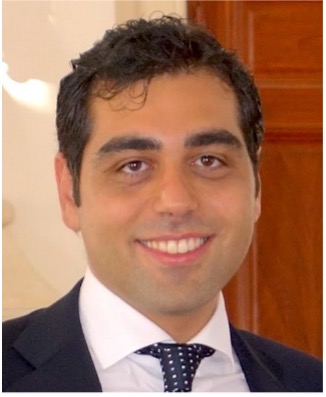
Matteo Sammarco
(Stellantis, France)
Bio: Matteo Sammarco is Senior Fellow in Data Science and AI and Chief Data Scientist Incubator in Stellantis, leading advanced data initiatives and innovation projects within the organization driving strategic efforts to incubate cutting-edge data solutions, fostering collaboration across teams and top stakeholders. Matteo holds a MSc in Computer Engineering from Università degli Studi di Napoli Federico II, Italy, and a PhD in Computer Science from UPMC-Sorbonne Université, France.
Keynote #3:
Title: Reconfigurable (Intelligent) Surfaces
Abstract: Reconfigurable Intelligent Surfaces (RIS) can improve link reliability enabling new forms of signal engineering. This keynote presentation will provide a broad and accessible overview of different RIS implementations and applications, highlighting how phase and (possibly) amplitude adjustments may be used to reshape the propagation environment. We will discuss advantages and limitations of passive and active RIS, as well as those of analog and digital implementations. We conclude the talk with an example of arbitrary beampattern design using transmit-array RIS (TA-RIS) and the possible extension to transmit arrays equipped with stacked intelligent metasurfaces (TA-SIM).
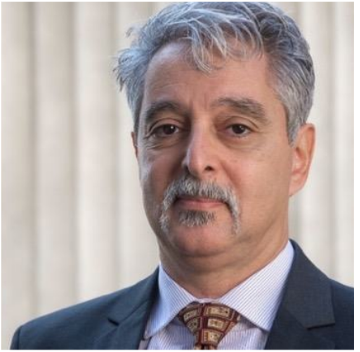
Marcello L.R. de Campos
(COPPE/UFRJ, Brazil)
Bio: Marcello L.R. de Campos is a Professor at the Electrical Engineering Program, COPPE/UFRJ. He has been working with signal processing for communications for the past three decades, with special interest in mobile wireless communications. He served as IEEE Communications Society Regional Director for Latin America in 2000 and 2001, founded and was the Chair of the IEEE Signal Processing Society Rio de Janeiro Chapter for four years, and is the current Chair of the Visibility and Outreach Committee of the Education Board of IEEE Signal Processing Society. He is a Senior Member of IEEE and of the Brazilian Telecommunications Society.